Roof repairs
Roof repair or replacement: how to make the right call
One leak does not automatically mean you need a new roof. The useful question is whether the fault is isolated or part of a wider pattern of failure.
A leak does not automatically mean a roof needs replacing. Equally, a series of cheap patches can become poor value when the covering, fixings or details are failing across several areas. The decision should come from the pattern of defects, the condition of the roof as a whole and the work needed to make it reliably weather-resistant.
Start by separating the visible symptom from the cause. A stain near a chimney may come from leadwork, pointing, a cracked tile, a valley or water travelling beneath the covering. Replacing the whole roof without identifying that route is excessive. Patching only the ceiling is not a roof repair at all.
When a focused repair may be enough
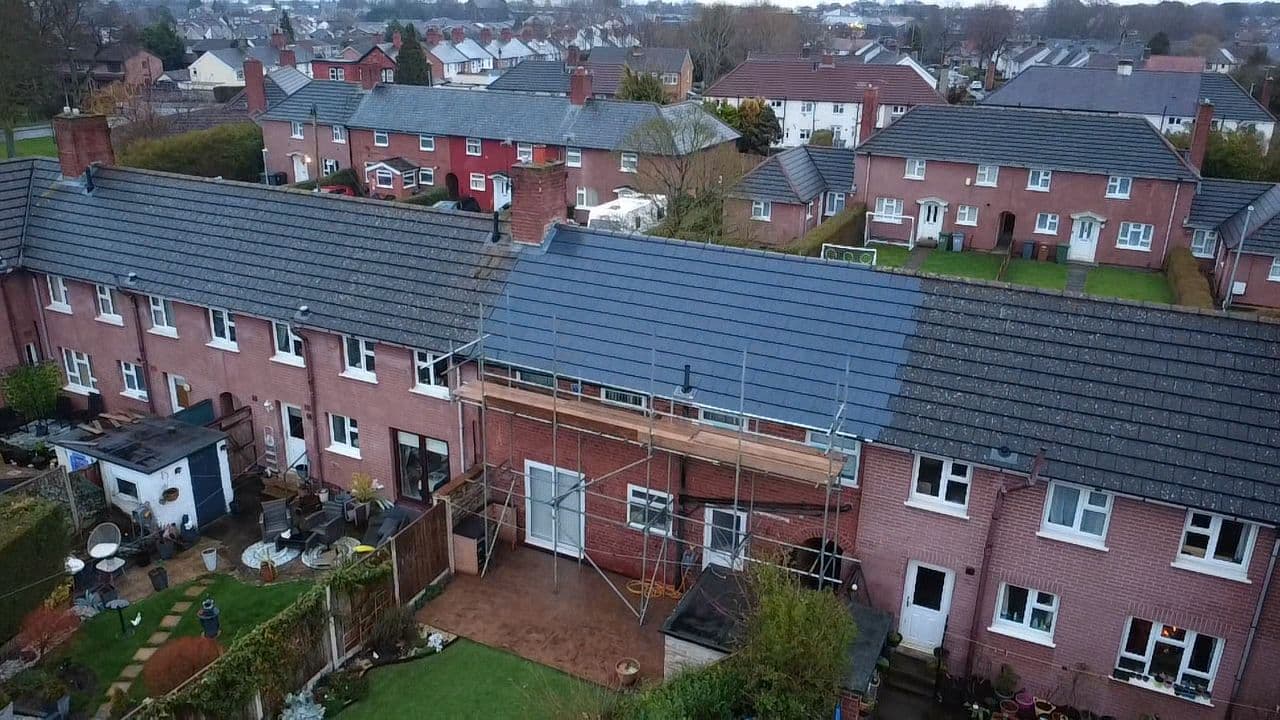
Repair is usually worth considering when the fault is localised and the surrounding roof remains serviceable. Examples include a small number of damaged slates or tiles, a discrete flashing defect, a blocked or damaged outlet, an isolated split in a flat-roof membrane or a short section of failed mortar. The material must be matchable and the repair needs a sound surface to connect to.
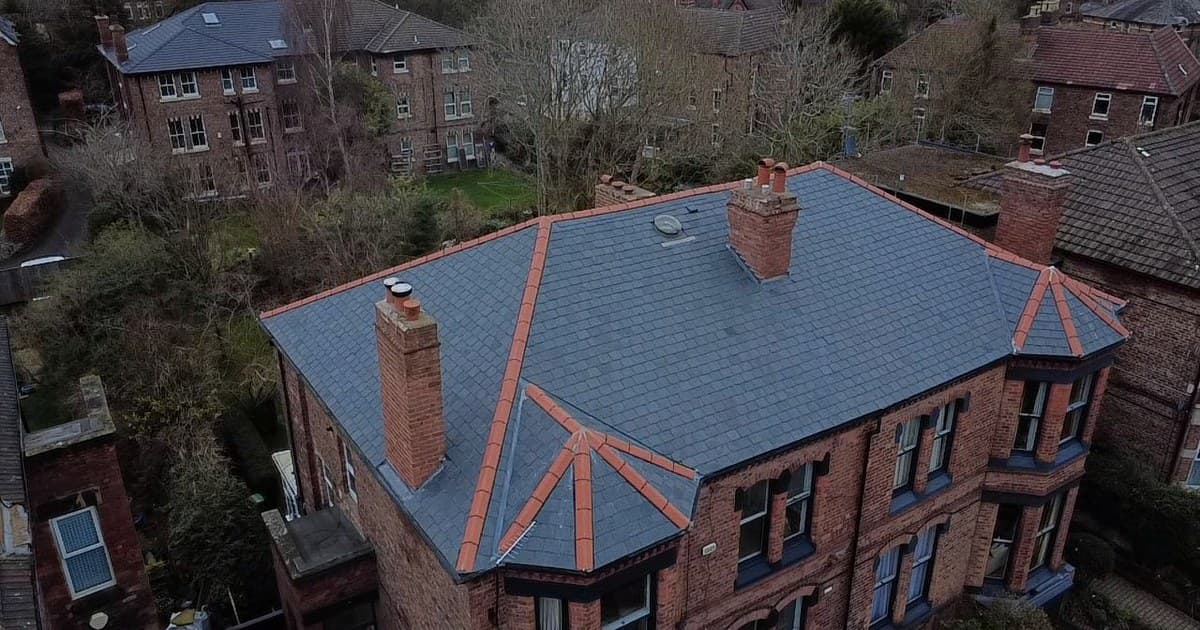
The age of the building does not decide this on its own. Historic England notes that traditional slate can outlast other parts of a roof and that individual slates may be re-fixed with suitable clips or tingles. On an older roof, the covering might still be usable even when fixings or lead details need attention. A careful survey should distinguish reusable material from failing support.
A sensible repair quote should identify the defect, describe how access will be provided, name the replacement material and explain the finish. It should also state what is not included. If opening the area could reveal damaged battens or deck, the quote should explain how additional work would be agreed rather than leaving the price open-ended.
Signs that replacement deserves serious consideration
Replacement becomes more reasonable when defects are widespread, repeated or rooted in the underlying construction. Several unrelated leaks, large areas of loose covering, extensive fixing failure, a deteriorated deck, failed underlay combined with movement, or repeated patches that no longer hold can indicate that local work will not provide a stable result.
Look at the repair history. One repair after impact damage is different from several callouts across multiple elevations. Keep dates, photographs and invoices. A simple timeline can show whether faults are isolated or moving around the roof. It also helps a second roofer understand what has already been attempted.
Internal signs matter too. Persistent damp in more than one room, daylight through damaged roof layers, decayed deck or timber, and insulation repeatedly becoming wet all call for a broader inspection. These symptoms still do not prove every component needs replacement, but they make a cosmetic patch less credible.
Ask for evidence, not a verdict
A homeowner should not have to choose between two unexplained statements: "it only needs a patch" and "the whole roof has gone". Ask each contractor to show the condition that supports the recommendation. Useful evidence includes wide and close photographs, notes on the roof covering and fixings, the extent of affected areas, the condition of the deck or battens where visible, and an explanation of how water is entering.
For a replacement proposal, ask whether any material can be retained, what new build-up is proposed, how ventilation and insulation are handled, and which edges, valleys, abutments and rainwater details are included. For a repair proposal, ask what would make the repair unsuccessful and how the contractor has assessed the surrounding area.
Our roof repair and new roof pages describe the two service routes, but the correct route should be selected only after inspecting the property. A large job is not automatically better, and a small job is not automatically better value.
Compare the whole cost, not only today's invoice
Cost comparison should include access, waste, associated details and the chance of repeated disruption. A local repair may be a sensible decision when it addresses a clear fault and leaves the rest of the roof dependable. It can be false economy when each visit needs new access equipment and another nearby area fails soon afterwards.
Replacement has its own risks. It is a larger commitment, may expose hidden substrate work and can trigger regulatory requirements. The quote should show what is allowed for and how variations will be approved. Do not compare a repair total with a replacement total as if both deliver the same scope. Compare what each option is expected to achieve and for which parts of the roof.
Avoid lifespan promises that ignore material, exposure, detailing and maintenance. A roof is a system. Coverings, fixings, membranes, outlets, leadwork and timber do not all age at the same rate. A written assessment should explain the condition present now rather than offer a generic number of years.
Building Regulations may affect a re-roof
In England, planning permission and Building Regulations are separate questions. Planning Portal guidance explains that re-roofing will usually need Building Regulations approval in many situations, even where planning permission is not needed. Thermal performance, loading and the extent of renovation can all matter.
Ask who will notify building control or use an appropriate competent-person route, what evidence you will receive and whether the proposed material changes the roof load. Do not assume the phrase "like for like" settles every regulatory point. Our guide to roof planning permission and Building Regulations sets out the questions in more detail. Even where no separate application is required, the work must still meet any Building Regulations standards that apply.
A practical comparison checklist
- Is the defect isolated, or are several parts of the roof failing?
- Has the same area been repaired before?
- Are the surrounding materials secure enough to receive a repair?
- What evidence shows the condition of the deck, battens or underlay?
- What access, waste removal and making-good are included?
- How will unexpected work be photographed, priced and approved?
- Does the proposal require building-control involvement?
- What written workmanship and material information will be provided?
Compare the evidence behind each option. Reject any proposal, repair or replacement, that does not identify the defect, define the scope and explain what result the work is expected to achieve. If you are comparing contractors, use the roofing quote and contractor checklist. For water entering now, start with the safe heavy-rain leak guide.
Making the decision for your property
Choose repair when a defined fault can be connected to sound existing work and the wider roof has been checked. Consider replacement when problems are distributed, supporting layers are damaged or repeated repairs no longer provide a dependable result. If the evidence is unclear, pay for an inspection or seek another written opinion before committing.
Stockholms Roofing covers Liverpool, Wirral, Chester, Cheshire and North Wales. To discuss a leak, repeated repairs or a proposed re-roof, use the contact page and ask for photographs and scope to be included with the assessment.