Mold sits at CH7, the county town of Flintshire, about twelve miles west of Chester in the Vale of Clwyd foothills. It is a small market town with a disproportionate number of listed and conservation-area properties for its size. The area around the High Street, King Street and Wrexham Street carries a dense cluster of Grade II listed buildings, and the residential streets on the higher ground to the north and south include sandstone cottages and former farmhouses that predate the Victorian terrace belt around them.
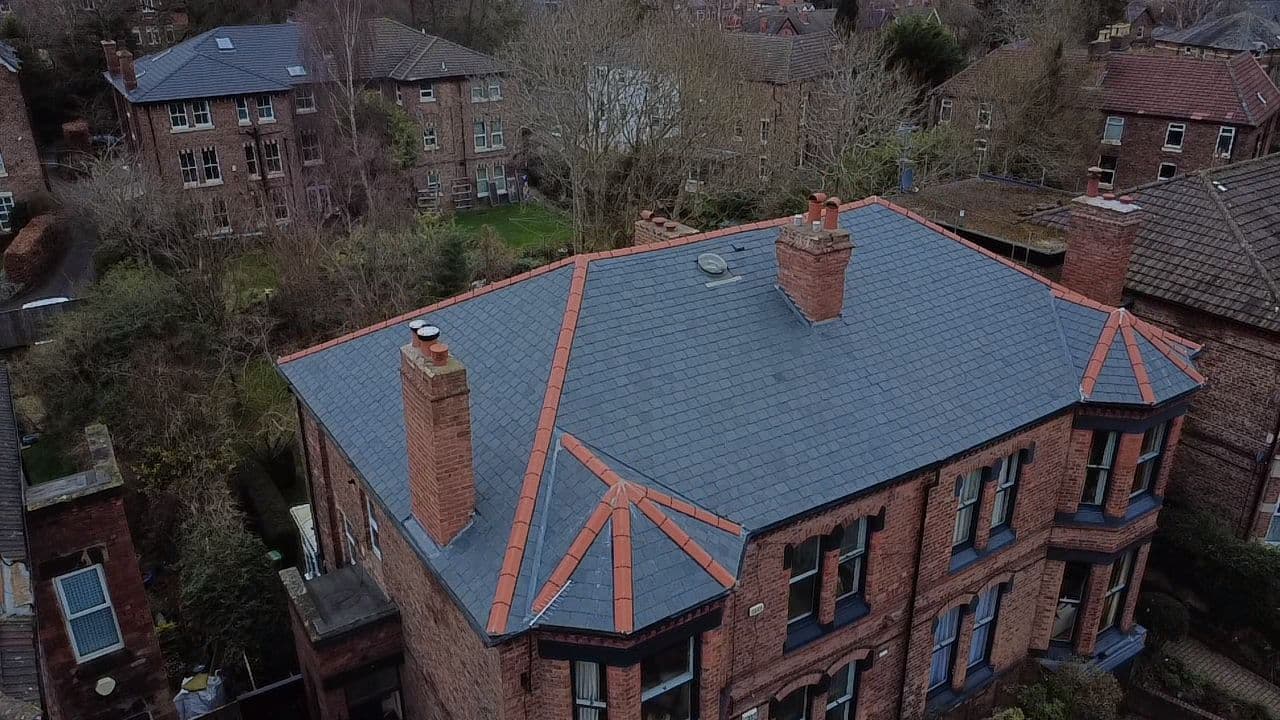
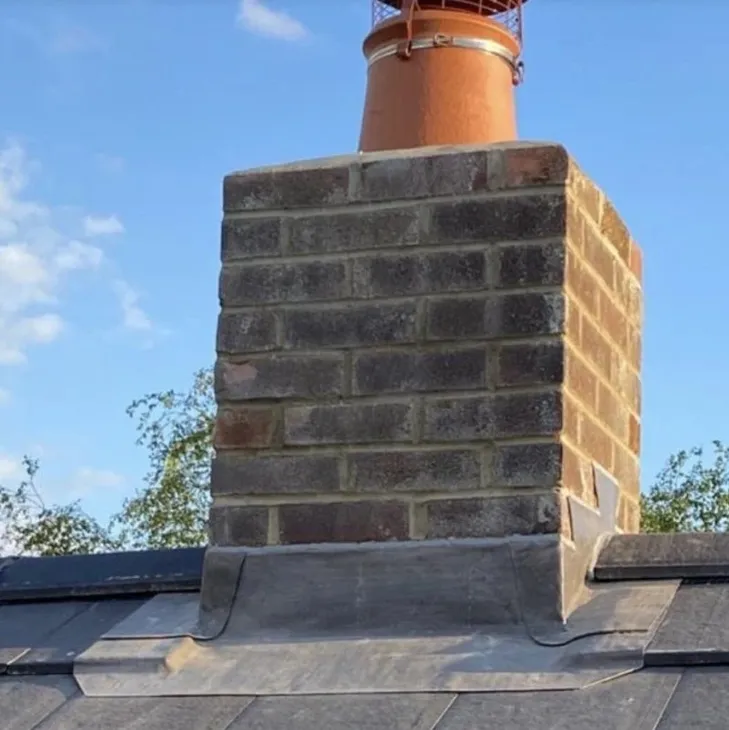
The sandstone-and-slate combination is the signature of Mold's period stock. Welsh slate was quarried locally enough that it was the near-universal roofing material for anything built before the mid-twentieth century, and it sits on those roofs in thick random-width courses that outlast most modern alternatives. The constraint is not the slate but the surrounding detail: lime mortar at the ridge, hand-cut lead at valley and chimney junctions, and wooden pegs or early copper nails that have corroded. We use lime-compatible mortar on any Mold repair job involving a property that is likely to be listed or to sit in the Mold Town Conservation Area, because hard cement on lime-built walls causes spalling.
Flintshire Council's listed-building consent process is the gating item on any front-elevation work at Mold. We help with the application paperwork as part of the job on listed properties.